
Guided tastings: how to recognise a high-quality DOP product
Taking part in a guided tasting in Emilia-Romagna means much more than simply tasting. It means learning to distinguish, understand and evaluate. In the Food Valley, home to some of Europe’s most important DOP products, knowing how to recognise a high-quality one is an integral part of the experience.
But how do you actually tell if a DOP product is excellent? And what signs should you look out for during a tasting?
What does DOP really mean?
DOP stands for Protected Designation of Origin. It is not just a label, but a European certification that guarantees:
• A specific geographical origin
• A regulated production method
• Checks throughout the supply chain
• A direct link to the local area
However, even within the same DOP, there may be differences in quality relating to maturation, processing and attention to detail. This is where guided tasting comes into play.
The importance of visual analysis
Every tasting begins with the eyes.
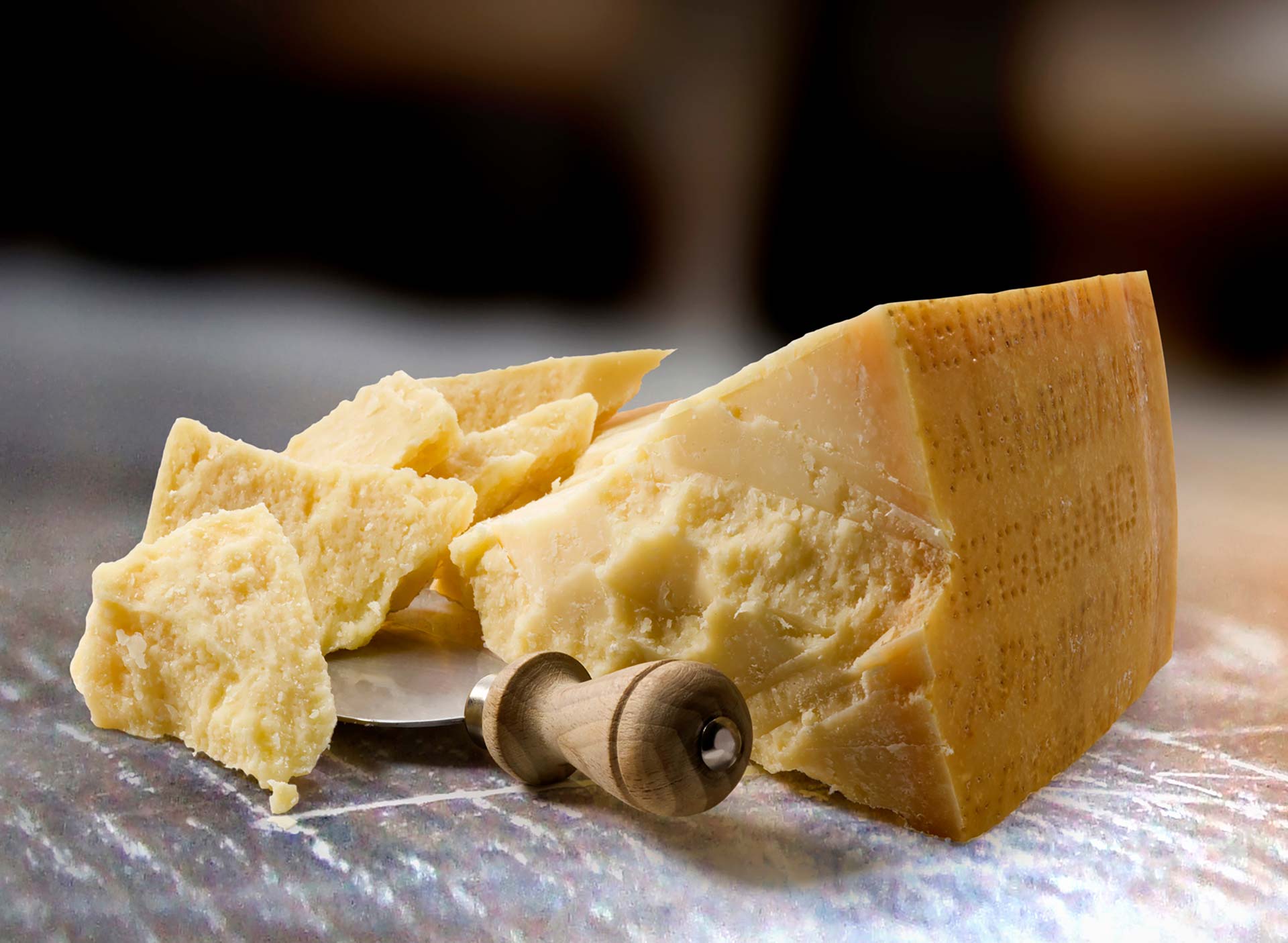
Parmigiano Reggiano
The cheese should be firm yet grainy, with visible tyrosine crystals in the more mature cheeses. The colour ranges from pale straw to deeper shades as it ages.
Prosciutto di Parma
The slice should have a balanced marbling: the white fat should be well distributed and never excessive. The colour of the lean part, on the other hand, should be pinkish and uniform.
Traditional Balsamic Vinegar
Density is key: it should drip slowly from a teaspoon, with a silky texture and natural sheen.
Appearance alone tells you a great deal about the quality.
The role of the sense of smell: recognising complexity and purity
A high-quality DOP product has a distinct, recognisable aroma, free from any unpleasant notes.
• Parmigiano may reveal hints of dried fruit, cooked milk and stock.
• Prosciutto di Parma must have a sweet and delicate aroma, never pungent.
• Traditional Balsamic Vinegar releases notes of wood, ripe fruit and harmonious acidity.
During a guided tasting, the expert helps participants identify these nuances, teaching them to distinguish between intensity and finesse.
Tasting notes: balance and length
The key moment is the tasting.
A high-quality PDO product can be recognised by:
• A balance between sweetness, savouriness and acidity
• Aromatic persistence, that is, how long the flavour lingers
• A texture consistent with the ageing period
A 36-month-old Parmigiano, for example, should be more intense and complex than an 18-month-old one, but never harsh or excessively salty.
In Prosciutto di Parma, the natural sweetness must prevail over excessive saltiness.
Ageing as an indicator of quality
For many DOP products in the Food Valley, the ageing process is crucial.
• Parmigiano Reggiano: 12, 24, 36 months and beyond
• Prosciutto di Parma: minimum 12 months
• Traditional Balsamic Vinegar: minimum 12 or 25 years (extra-aged)
‘More mature’ does not always mean ‘better’ in absolute terms. It means different. Quality is measured by the consistency between the maturation process and the sensory characteristics.
The importance of context and expert guidance
A professional guided tasting enables you to:
• Compare different ages of cheese
• Understand the differences between producers
• Learn the correct technical terminology
• Avoid superficial judgements
In Emilia-Romagna, many companies and consortia organise educational experiences specifically designed to educate consumers about quality.
Labelling and traceability: the details that matter
In addition to the sensory aspects, it is important to check:
• The presence of the official DOP mark
• The producer’s identification code
• The production batch
• Any consortium marks stamped on the rind (in the case of cheese)
Traceability is an integral part of the concept of certified quality.
Learning to recognise things so you can make better choices
Recognising a high-quality DOP product means becoming more informed consumers.
The Food Valley offers a unique setting in which to do so: here, the culture of tasting is widespread, and producers and consortia invest in educating the public.
It is not just a matter of personal taste, but of understanding:
• The value of the supply chain
• The time required to produce excellence
• The deep connection between the product and the local area
Tasting as a cultural experience
In Emilia-Romagna, guided tastings are not just for experts. They are an opportunity for gastronomic education open to everyone.
Learning to recognise a high-quality DOP product means delving into the heart of the Food Valley, understanding what distinguishes genuine excellence from a mere imitation, and taking home a skill that changes the way you taste food.
Because once you learn to recognise quality, it no longer goes unnoticed.